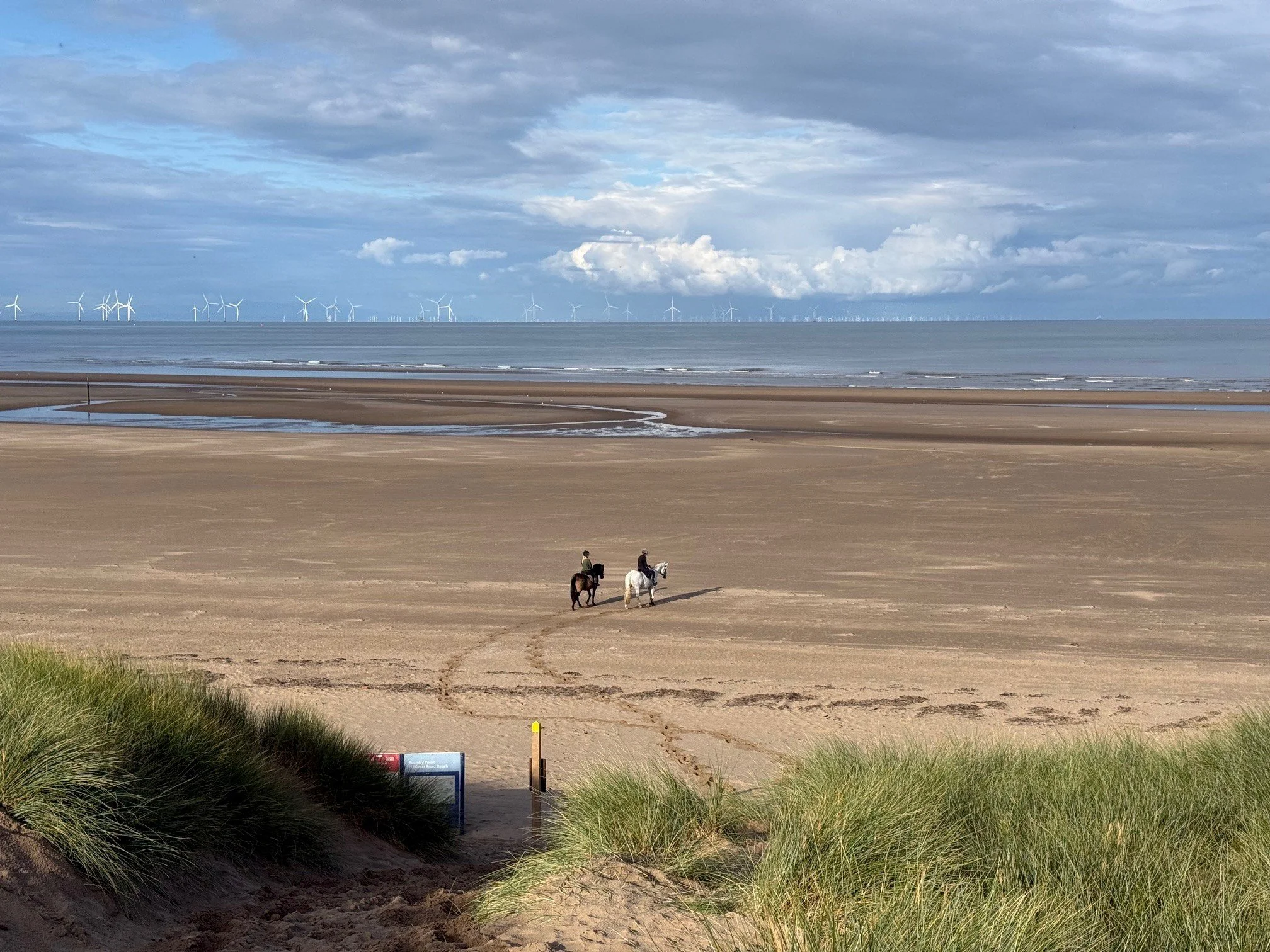
Last weekend, my friend and I took our horses to the beach. It’s one of my favourite things to do and (anecdotally) has several benefits, including:
It’s a mentally stimulating environment for horse and rider 😊
It uniquely enables exercise for long distances on a straight line, which is generally indicated in the early stages of most rehabilitation plans AND for fitness and fast work in healthy horses.
It’s a great setting for developing fitness and stamina through both “long, slow distance” and “fast work”. If you have one, use a HR monitor to objectively inform and monitor your horse’s fitness training and progression – and to keep an eye on how your horse is coping with workload!
Beaches also offer a variety of surfaces that differ according to moisture content and subsequent sand depth - and research can tell us how this modifies limb loading and movement patterns in horses! These are things that I keep in mind when exercising my own horse on the beach, and when suggesting this type of exercise to clients!
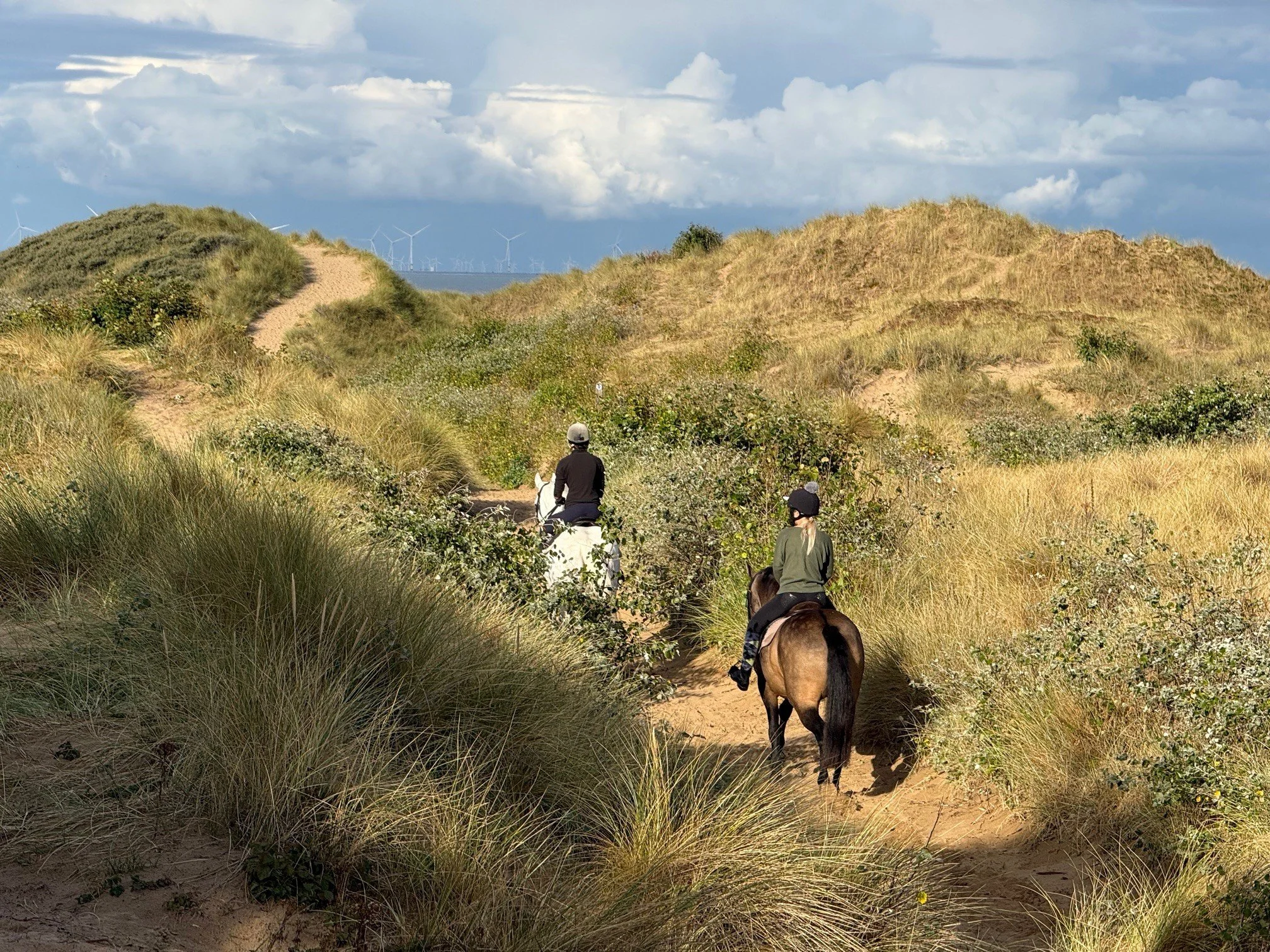
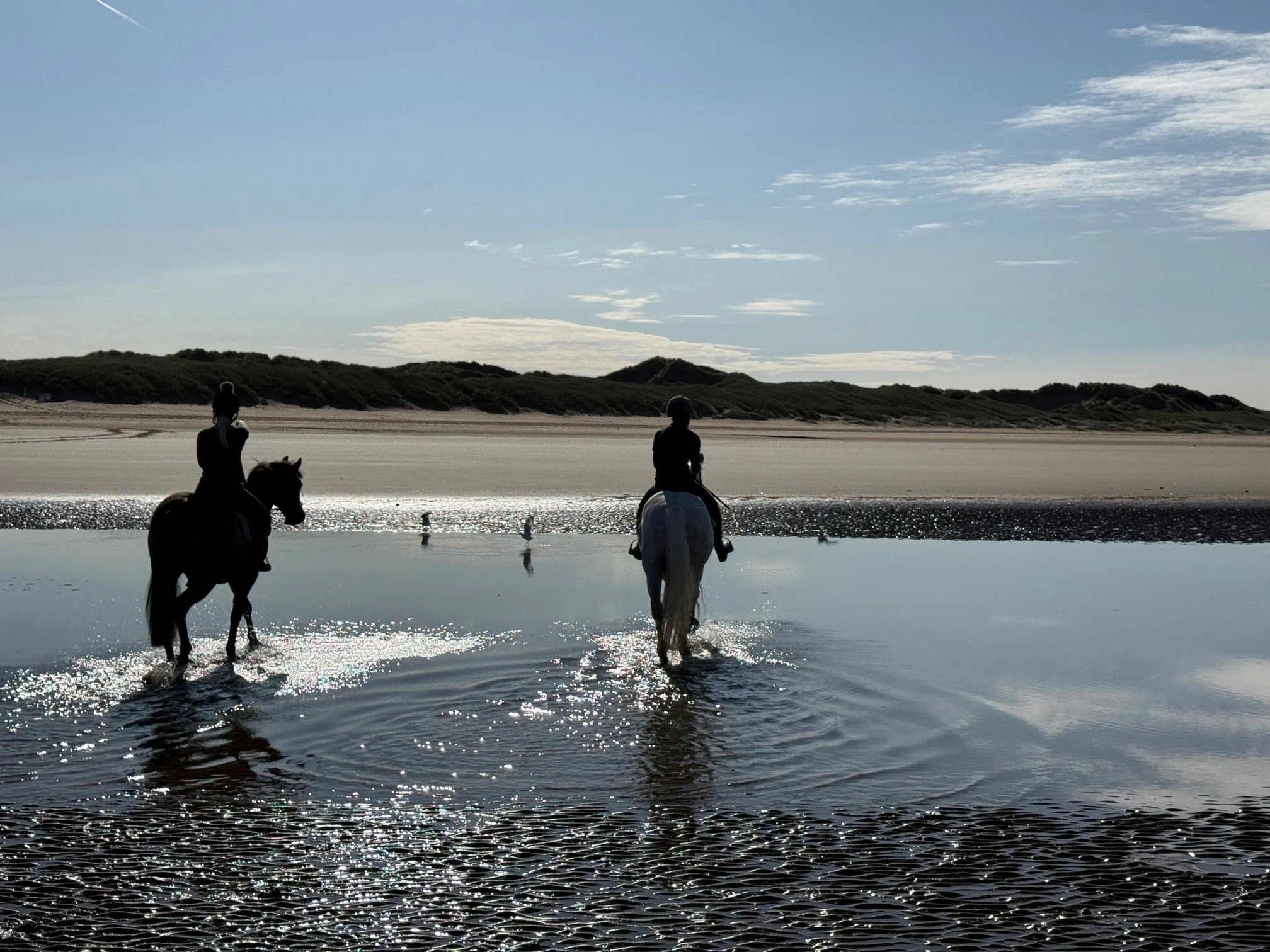
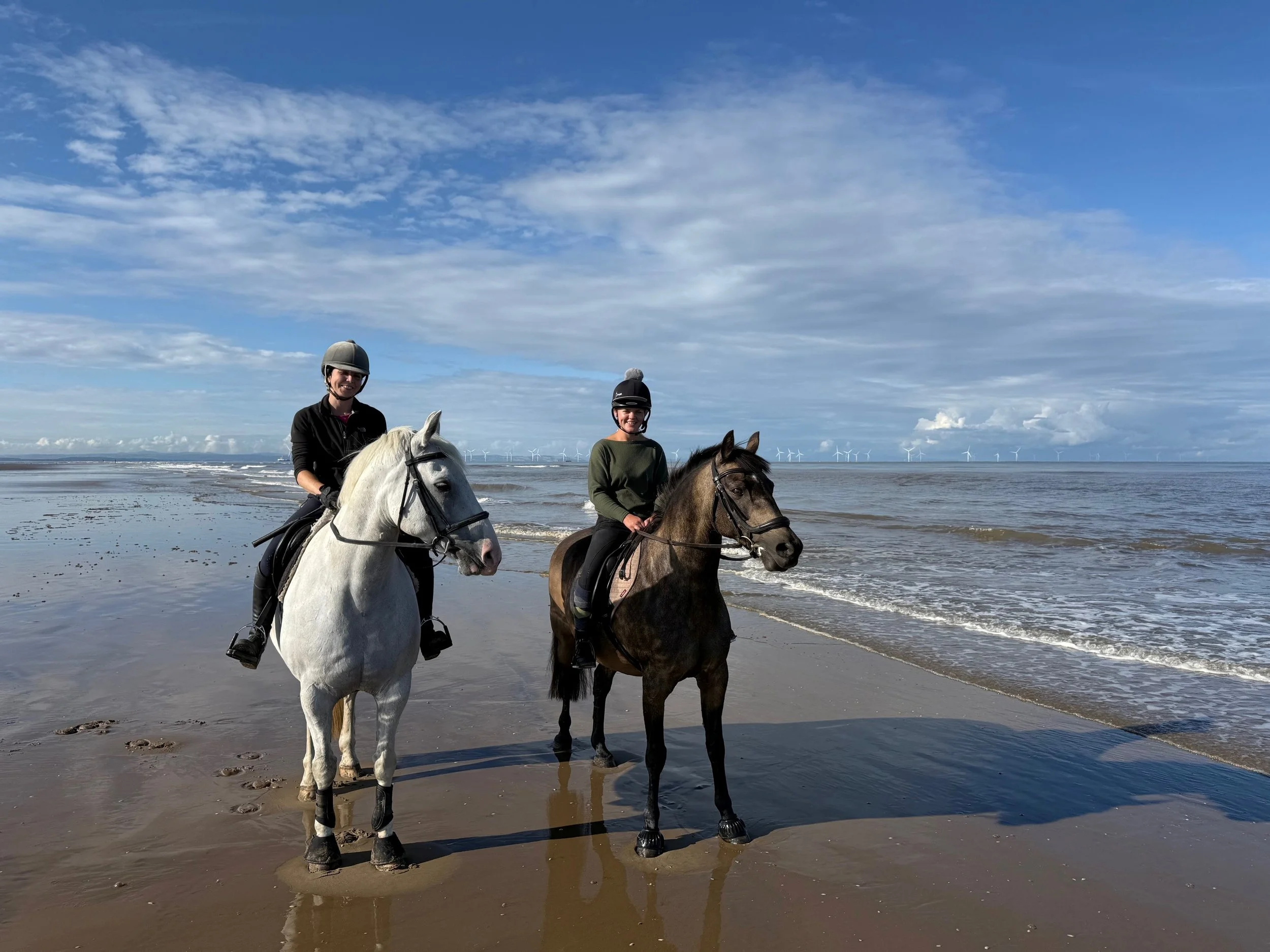
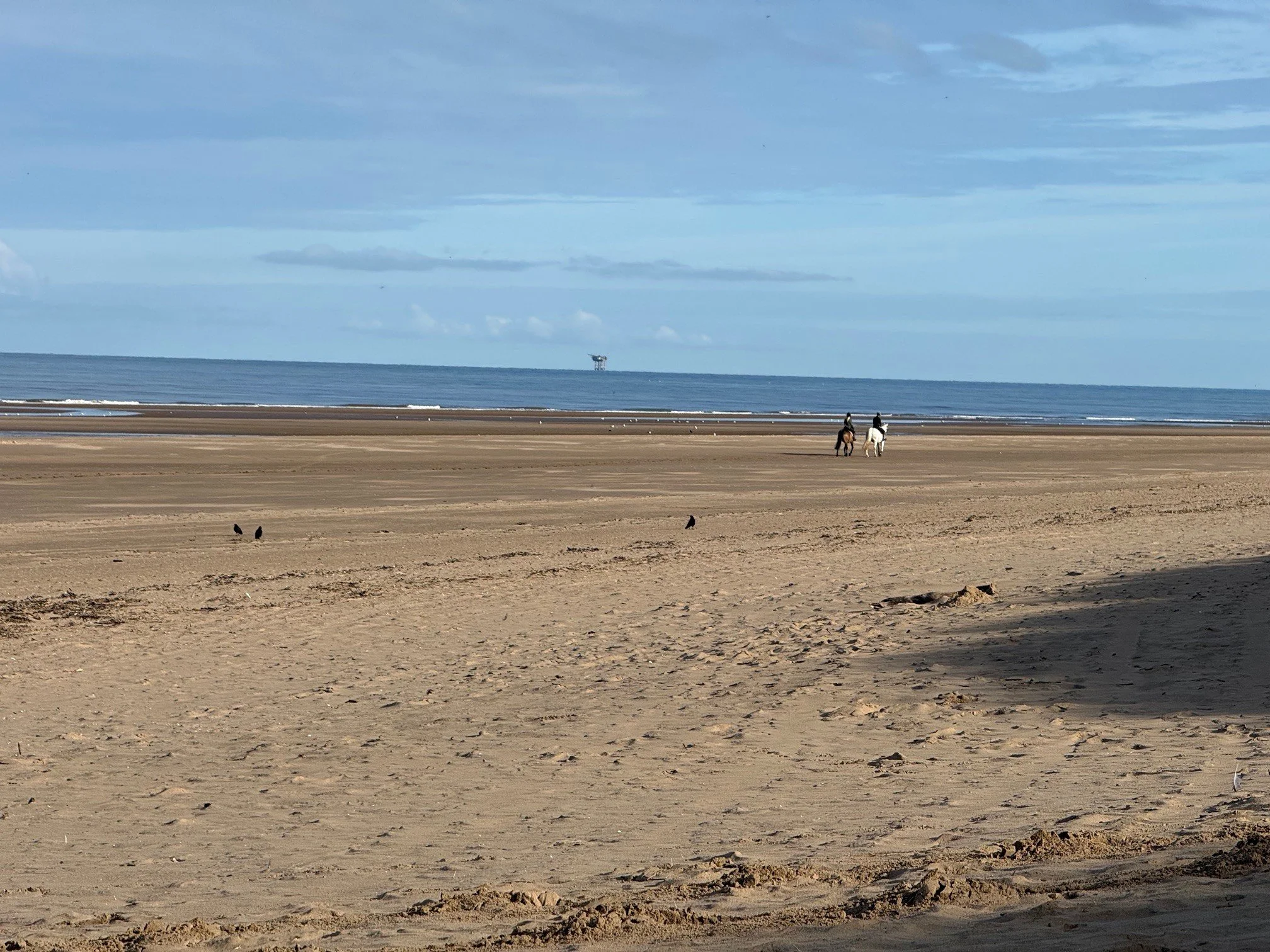
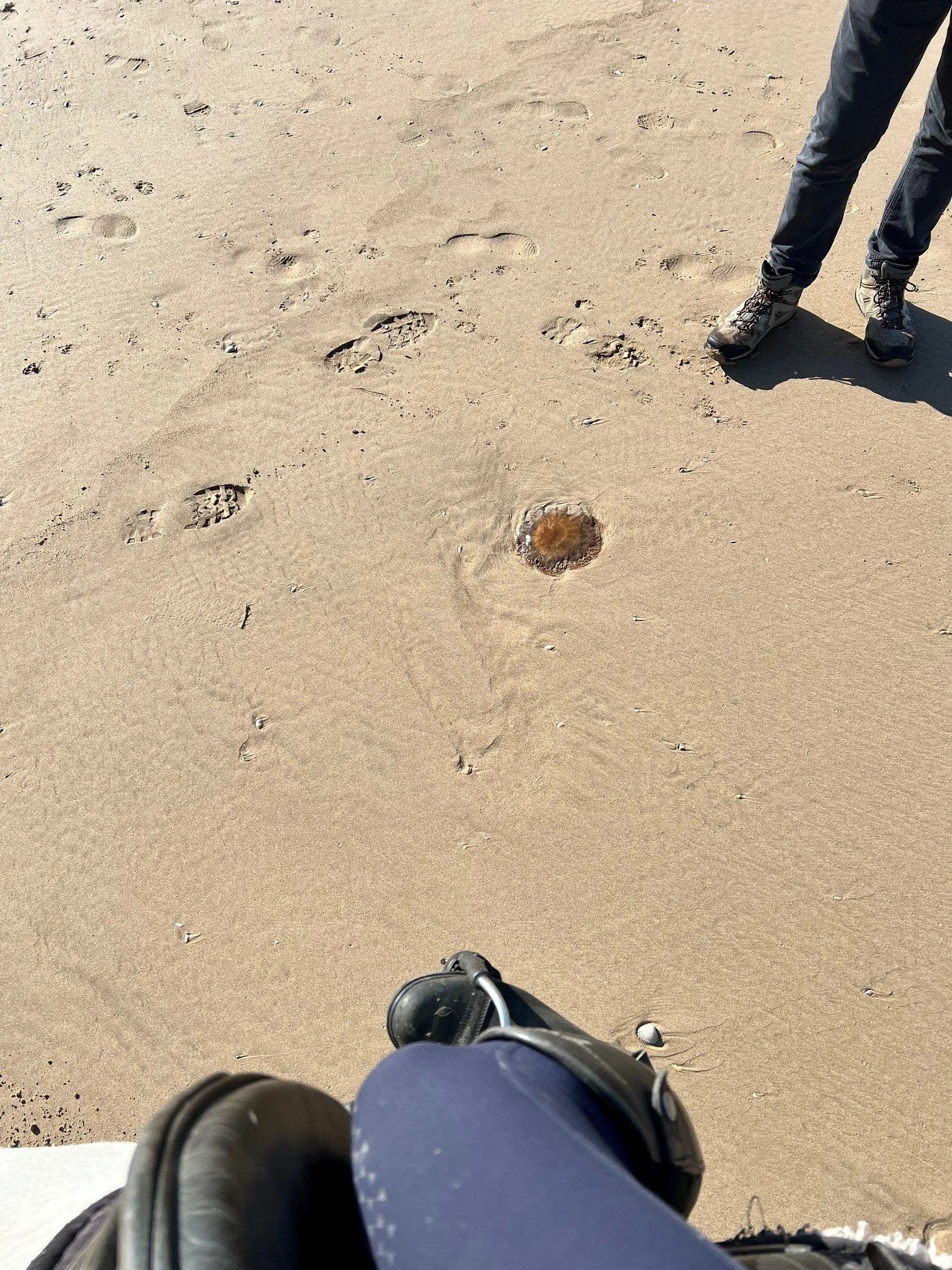
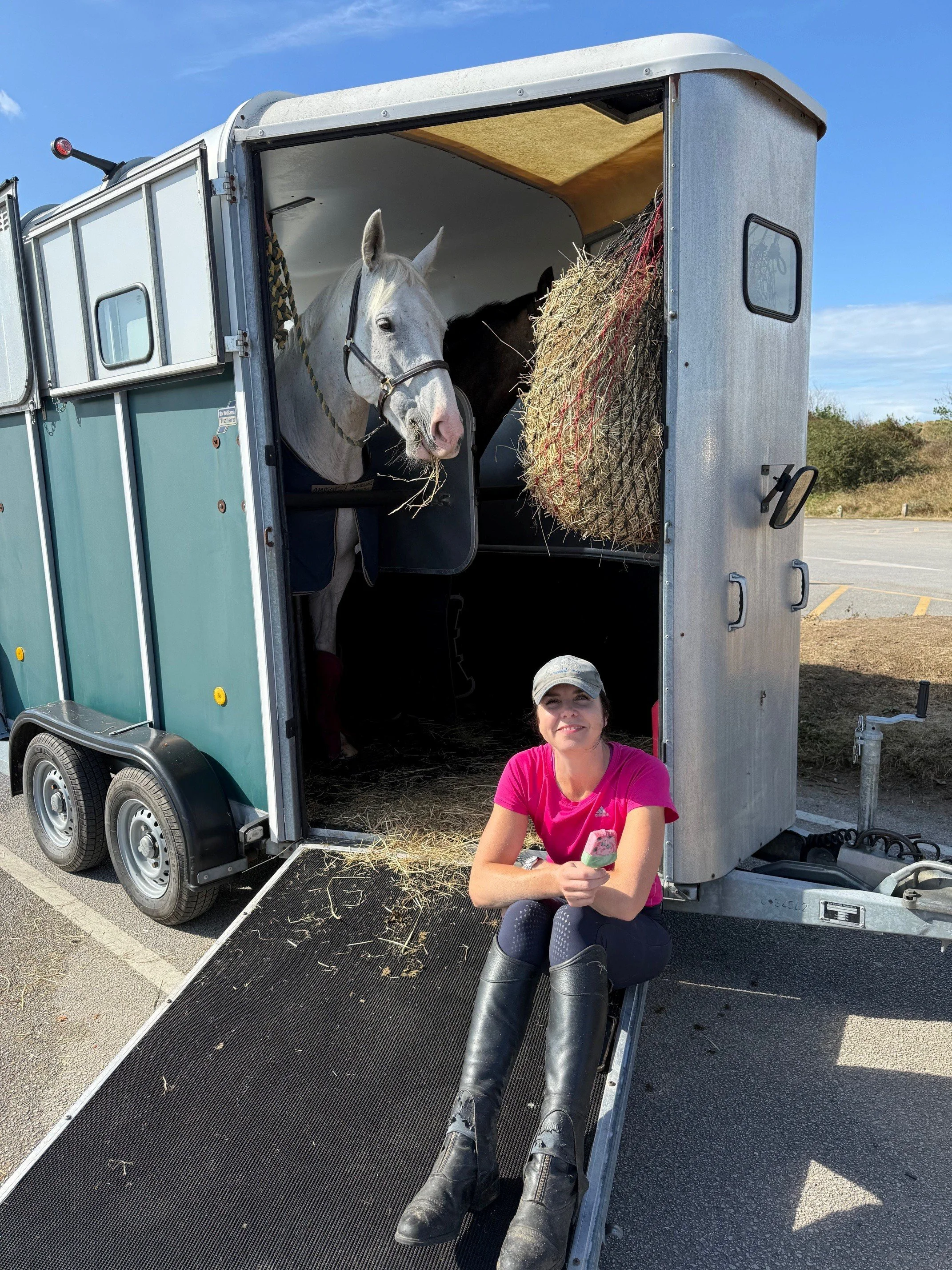
Scientists used a special force measuring horseshoe to study the effect of different beach sand surfaces on forelimb loading in trotting horses. They found that:
On firm sand (i.e. closer to the water), horses experience greater breaking (deceleration) and peak vertical forces, but have a longer stride length, when compared to “deep, wet” and “deep, dry” sand.
On deep, wet sand, horses experience comparatively lower peak loading and breaking (almost 2-fold lower!) forces and less fetlock extension, each of which occur later in the stride cycle (i.e. more gradual loading) when compared to firmer sand. Researchers found that this decreased loading comes at the expense of horses needing to generate greater propulsive (push off) forces on deep sand, which occurs when loading forces and fetlock extension are still high (because of the slower loading rate). This can place greater strain on digital flexor muscles and tendons, especially the SDFT.
So – deeper sand may reduce vertical and decelerative forces while increasing the demands placed on tendons and other musculoskeletal structures. Further, horses exhibit higher stride frequency and shorter stride length in deeper sand, which is not always desirable for training and/or rehabilitation (depending on your goals).
Notably- these studies were conducted on French trotters and no studies have been conducted on ridden horses. Still, this information can inform your beach riding regime – whether it’s to build your horse's fitness or to incorporate varied surfaces into a rehabilitation programme. Enjoy the beach, but be safe and choose your footing wisely to fulfil your horse’s needs!
The research articles are free to read:
Crevier‐Denoix, N., Robin, D., Pourcelot, P., Falala, S., Holden, L., Estoup, P., Desquilbet, L., Denoix, J.M. and Chateau, H., 2010. Ground reaction force and kinematic analysis of limb loading on two different beach sand tracks in harness trotters. Equine Veterinary Journal, 42, pp.544-551. https://doi.org/10.1111/j.2042-3306.2010.00202.x
Chateau, H., Holden, L., Robin, D., Falala, S., Pourcelot, P., Estoup, P., Denoix, J.M. and Crevier‐Denoix, N., 2010. Biomechanical analysis of hoof landing and stride parameters in harness trotter horses running on different tracks of a sand beach (from wet to dry) and on an asphalt road. Equine veterinary journal, 42, pp.488-495. https://doi.org/10.1111/j.2042-3306.2010.00277.x